Buying Guide
Tesla Model 3 Price in the Philippines (2026): Cost to Buy, Charge and Own
By EVChargePH Team · July 11, 2026 · 11 min read
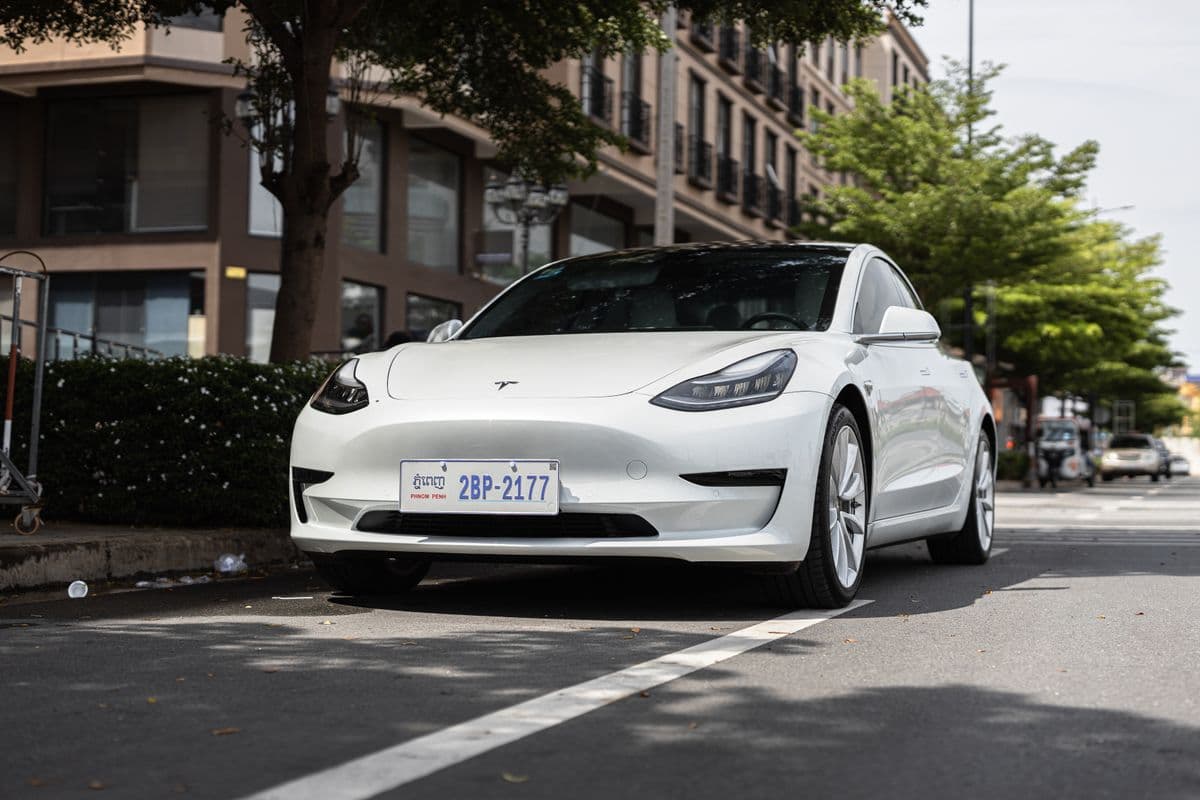
The Tesla Model 3 price in the Philippines starts at an approximate SRP in the low-2-million-peso range for the entry rear-wheel-drive version in 2026, rising toward the mid-3-millions for the Performance trim. Charging it is where the story gets cheap: a full home charge on a typical Meralco rate costs only a few hundred pesos, and running costs land far below an equivalent petrol car. All prices here are indicative for 2026 and shift with trim, promos, and currency, so confirm the current figure before buying. Here is the full cost picture for buying, charging, and owning a Model 3 in the Philippines.
How much is the Tesla Model 3 in the Philippines?
The Tesla Model 3 price in the Philippines depends heavily on which of the three familiar trims you choose, and the spread between them is substantial. As an approximate 2026 guide, the line-up runs from the entry rear-wheel-drive car in the low-2-million-peso range, through the Long Range all-wheel-drive version in the high-2-millions, up to the Performance model in the mid-3-million-peso territory. These are indicative figures rather than fixed quotes, and Tesla's direct pricing can move with currency and promotions, so always confirm the live number.
The three trims broadly break down like this in terms of what your money buys:
- Rear-wheel drive (entry), the most affordable way into a Model 3, with strong range and the core experience at the lowest price.
- Long Range all-wheel drive, adding a second motor, more range, and quicker acceleration for a meaningful step up in price.
- Performance, the quickest and priciest, aimed at buyers who want the sharpest acceleration and handling.
For full specifications, colours, and the current configuration, see our Tesla Model 3 model page, and browse the wider EV catalog if you want to line it up against rivals. It is worth being clear that the Model 3 sits in the premium tier of the Philippine EV market rather than the budget end; if a lower entry price is your priority, our guide to the cheapest electric cars in the Philippines covers models that start well under half the Model 3's SRP. What the Tesla offers for its price is range, performance, technology, and access to Tesla's own charging approach, which we cover below.
What does it cost to charge a Tesla Model 3?
Here is where the Model 3 shines against a petrol car, because charging it is dramatically cheaper than filling a tank. Charging at home on a typical Meralco residential rate of roughly 11 to 13 pesos per kWh means a full charge of the Model 3's battery costs only a few hundred pesos, a fraction of what an equivalent petrol car spends on fuel for the same range. Because you charge overnight while the car is parked anyway, the slow speed is invisible and the convenience is total.
The two charging scenarios you will actually use look like this:
- Home charging, your default, drawing straight from your residential rate for the cheapest possible refill, typically working out to around 1.5 to 3 pesos per kilometer. Our guide to EV home charging setup covers the wallbox and dedicated circuit you will want.
- Public charging, for trips and top-ups, which costs more per kWh because you pay for the location and the speed of DC fast charging, but is invaluable when you need range away from home.
The Model 3 uses the standard CCS2 connector for DC fast charging in the Philippine market alongside Type 2 for AC, so it plugs into the growing public network the same way other modern EVs do. You can find and reserve public chargers on our map, and our guide to EV charging stations in the Philippines shows how the network of Shell Recharge, eSakay, Ayala, SM, and Unioil sites has expanded. For how Tesla's own charging fits into the local picture, our comparison of Tesla Supercharger versus local networks is the deeper read, and our EV charging cost guide breaks down the home-versus-public maths in full.
Model 3 running cost vs a petrol car
The running-cost gap between a Model 3 and a comparable petrol car is where the premium purchase price starts to pay itself back, and over years of driving the difference is large. Fuel is the headline saving: charging at home works out to roughly 1.5 to 3 pesos per kilometer, often less than half what a petrol executive sedan costs to run at 2026 pump prices. For a driver covering serious annual mileage, that gap alone amounts to a meaningful sum every year.
The savings are not limited to fuel, either. An electric drivetrain has far fewer moving parts than a petrol engine, so there are no oil changes, fewer wearing components, and generally simpler maintenance, which our guide to EV maintenance in the Philippines explains. Regenerative braking also reduces brake wear over time. Together these trim the ongoing cost of ownership below that of a comparable petrol car, even before you count the fuel difference.
To turn this into real numbers for your own situation, the EV savings calculator lets you enter your mileage and compare a Model 3 against a petrol car directly, which is far more useful than any generic estimate. The overall pattern is consistent: the more you drive, the faster the running-cost savings offset the Model 3's higher upfront price. For a low-mileage driver the premium is harder to justify on economics alone, while for a high-mileage one it can be genuinely compelling, a trade-off our look at whether an EV is worth it explores in depth.
Is the Tesla Model 3 worth it in the Philippines?
Whether the Tesla Model 3 is worth its price in the Philippines depends on what you value, because you are paying a premium not just for an EV but for a specific package of range, performance, and technology. On pure running costs, cheaper EVs deliver similar per-kilometer savings for a much lower purchase price, so the Model 3 is not the value pick if economy is your only goal. What it offers instead is a combination of long range, strong performance, a distinctive software experience, and Tesla's charging ecosystem that budget models do not match.
The honest way to frame the decision is to separate the two questions. If you want the cheapest route to electric driving, look at the budget segment. If you specifically want what the Model 3 offers and can afford its SRP, then the running-cost savings make ownership cheaper over time than a comparable petrol car of similar performance, softening the premium. It is a premium car that happens to be cheap to run, not a cheap car, and buyers who understand that tend to be happy with it.
It also helps to compare it against its closest rivals rather than in isolation. Our head-to-head on BYD versus Tesla in the Philippines and the more focused Tesla Model 3 versus BYD Seal comparison show how the Model 3 stacks up against strong local competition, and our full BYD Philippines guide covers the main alternative brand. Whatever you decide, confirm the current SRP directly, check that home or nearby charging is convenient using the map, and run your own numbers through the EV savings calculator before committing.
Frequently asked questions
How much does a Tesla Model 3 cost in the Philippines in 2026?
As an approximate 2026 guide, the Tesla Model 3 starts in the low-2-million-peso range for the entry rear-wheel-drive version, rises to the high-2-millions for the Long Range all-wheel-drive, and reaches the mid-3-million-peso territory for the Performance trim. These are indicative figures that move with currency, trim, and promotions, so confirm the current SRP directly before buying rather than relying on any fixed number.
How much does it cost to charge a Tesla Model 3 at home?
On a typical Meralco residential rate of roughly 11 to 13 pesos per kWh, a full charge of the Model 3's battery costs only a few hundred pesos, which works out to around 1.5 to 3 pesos per kilometer. Because you charge overnight while the car is parked, the low speed is invisible. That is a fraction of what an equivalent petrol car spends on fuel for the same distance.
Is the Tesla Model 3 cheaper to run than a petrol car?
Yes, usually by a wide margin. Home charging costs roughly 1.5 to 3 pesos per kilometer, often less than half a comparable petrol sedan, and the electric drivetrain needs no oil changes and less maintenance. The more you drive, the faster those savings offset the higher purchase price. Use the EV savings calculator to compare a Model 3 against a specific petrol car for your own mileage.
Where can I charge a Tesla Model 3 in the Philippines?
You will do most charging at home overnight, which is cheapest and most convenient. For trips and top-ups, the Model 3 uses CCS2 for DC fast charging and Type 2 for AC, so it plugs into the growing public network of Shell Recharge, eSakay, Ayala, SM, Unioil, and independent hosts. Find and reserve public chargers on our map, and see our Tesla Supercharger versus local networks guide for the full charging picture.
Be our partner
Power the Philippines' electric future with us
Earn from an idle charger, or put your brand in front of EV drivers while they charge. Join the EVChargePH network today.