Charging 101
Understanding kWh and Your Electricity Bill
By EVChargePH Team · April 29, 2026 · 8 min read
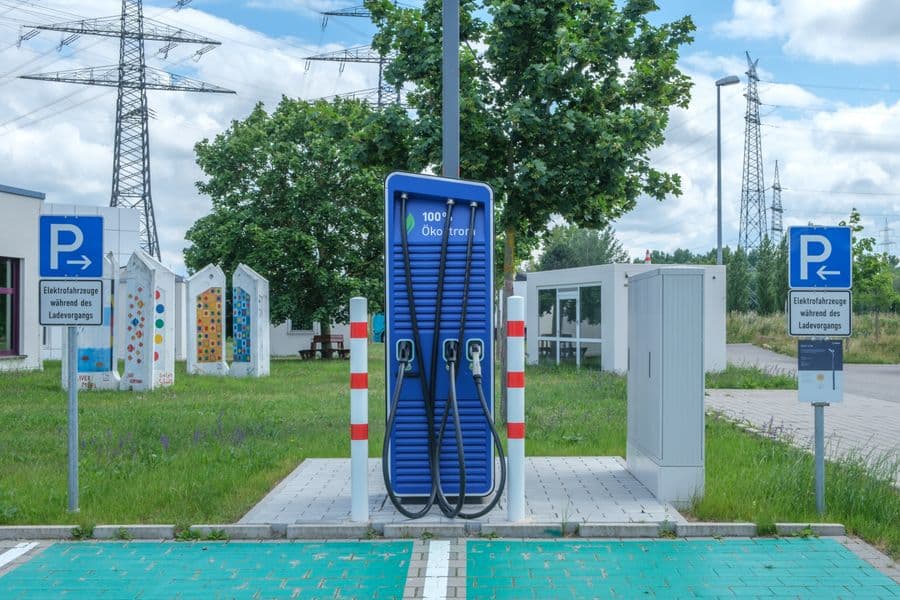
When you start charging an EV at home, your electricity bill quietly becomes part of your driving costs in a way it never was with a petrol car. To make full sense of it, there is one unit you really need to understand: the kilowatt-hour, or kWh. It is the bridge between the energy your car consumes and the amount you ultimately pay your utility each month. Once it clicks into place, home charging costs stop being a vague mystery and become something you can reason about with real confidence and even some satisfaction.
This guide demystifies the kilowatt-hour from first principles, shows how it connects your car to your bill, gives you a practical way to estimate your own charging costs, and explains why this small piece of knowledge pays off again and again over years of ownership.
What a kWh Actually Is
A kilowatt-hour is simply a measure of energy. It represents using one kilowatt of power for one hour. Two closely related terms often get confused with each other, so it genuinely helps to separate them clearly before going any further.
- Kilowatt (kW) is a measure of power, meaning how fast energy is being used or delivered at a given instant in time.
- Kilowatt-hour (kWh) is a measure of energy, meaning the total amount used over a stretch of time.
A useful analogy makes this distinction stick in the mind: power, measured in kW, is like the speed of water flowing from a tap, while energy, measured in kWh, is like the total amount of water that ends up collected in the bucket. A fast-flowing tap fills the bucket quickly, but it is the total volume you ultimately care about and pay for. Your electricity provider bills you for that total, the kWh, not for how fast it happened to flow at any moment.
This same distinction is exactly what governs charging speed, as our guide to charging speeds explained describes in detail: the kW rating sets how fast the energy arrives, while the kWh determines how much energy you have received in total. Keep these two ideas separate and almost everything else about EV energy becomes clearer.
How This Connects to Your EV
EV batteries are measured in kWh, and so is the energy you put into them, which is precisely what ties the whole system together into one coherent picture.
- A battery's capacity is given in kWh, which roughly indicates how much energy it can hold and therefore, broadly, how far the car can travel on a single charge
- When you charge, you are adding kWh into the battery, and those very same kWh show up as usage on your electricity bill at the end of the month
- Your driving efficiency can be thought of as how many kilometers you get per kWh, which varies with your driving style, the load you carry, the terrain, and the conditions on the day
This is exactly why charging at home simply appears as higher electricity usage rather than as a separate fuel purchase you make at a station. The car is, from the meter's perspective, just another appliance drawing energy through your supply, albeit a notably thirsty one. Setting all of this up properly is covered in our guide to home charging setup, which walks through doing it safely.
Putting kWh in Everyday Terms
To make the unit feel concrete rather than abstract, it helps to compare your car against the household appliances you already understand. You probably have an intuitive sense of which appliances are heavy on electricity and which are light, and an EV slots into that same mental scale.
- A single kWh is roughly the energy a modest appliance might use over a meaningful stretch of running time
- Charging a car adds many kWh in a session, which is why an EV is one of the larger energy users in a typical home
- Spread across a month of driving, though, that energy is delivered gradually and predictably rather than in alarming spikes
Seen this way, an EV is not some mysterious new category of cost; it is simply a sizeable but well-behaved addition to your existing electricity use. The key reassurance is that you can measure and predict it precisely, because every kWh is metered just like everything else in your home. This is quite different from the old experience of a petrol car, where fuel cost arrived in lump sums at the pump with little visibility into the rate per kilometer. With an EV, the relationship between energy in and distance out is transparent, steady, and entirely under your own control day to day. That transparency is one of the quietly satisfying parts of switching to electric, and it is exactly what makes budgeting so much easier and less stressful once the unit finally clicks into place in your mind.
Estimating Your Charging Cost
You can get a genuinely useful sense of your home charging cost with a simple line of reasoning, and no advanced mathematics is required at all.
- Find out your electricity rate per kWh from your own utility bill or provider. This is the single most important number in the whole calculation, and it is specific to your household.
- Estimate how many kWh you add when charging, which depends directly on how much range you replenish in a given session.
- Multiply the kWh by your rate for a reasonable ballpark cost of that charge.
A few important caveats apply as of 2026, and quietly ignoring them tends to produce misleading figures that disappoint later:
- Rates vary between providers and regions and can change over time, so always use your own actual rate rather than a fixed assumption you read somewhere online. A number that is perfectly true for one household may be quite wrong for another across town.
- Bills often include additional charges layered on top of the basic energy rate, so the headline per-kWh figure is only part of the full picture you actually pay.
- Charging losses mean a little more energy is drawn from the wall than ends up stored in the battery, so your real usage is slightly higher than the battery figure alone would suggest.
Even allowing for all these caveats, home charging is typically far cheaper per kilometer than petrol, a comparison laid out clearly in our piece on charging cost versus gas. The savings are usually substantial enough that small estimation errors hardly change the conclusion.
Comparing Home and Public Costs
Understanding the kWh also lets you compare your various charging options on a fair, like-for-like basis rather than by gut feel. Home charging through your own meter is usually the cheapest energy your car will ever use, while public fast charging typically costs more per kWh in exchange for its speed and convenience on the road. This is the economic side of the trade-off explored in our guide to public versus home charging. Knowing your home rate per kWh gives you a solid baseline to judge whether a given public session is a reasonable deal for the situation you are in, rather than simply guessing or feeling vaguely overcharged.
Why It Pays to Understand
Grasping the kilowatt-hour gives you real, practical control over your EV costs, which is genuinely empowering rather than merely academic trivia.
- You can compare home charging against public charging accurately instead of relying on vague impressions and hearsay
- You can spot exactly how your driving habits affect your energy use and therefore your monthly bill, and adjust them if you wish to
- You can budget with confidence rather than being caught off guard at the end of the month by an unfamiliar and unexplained number
This kind of cost awareness fits neatly into the bigger ownership picture covered in our look at the cost of EV ownership, where energy is just one of several factors that together make EVs economical to run over the long term. Energy costs are the part you control most directly through where and when you charge.
The Takeaway
The kilowatt-hour may sound rather technical at first encounter, but it is really just the humble unit that ties your car, your charging, and your bill together into one understandable story. Learn to think naturally in kWh, and the economics of EV ownership become far clearer than they ever were at the petrol pump, where the relationship between speed, volume, and cost was always hidden inside a single number ticking up on a screen.
Once you can picture energy flowing steadily from your meter into your battery and then out onto the road as kilometers, charging costs lose their mystery entirely and become just another manageable household figure. To see how this knowledge fits into the broader experience of going electric, our overview of how it works brings the pieces together, and anyone curious about turning their own meter into a small income stream can explore choosing to list your charger.
Be our partner
Power the Philippines' electric future with us
Earn from an idle charger, or put your brand in front of EV drivers while they charge. Join the EVChargePH network today.