Charging 101
How to Pay for EV Charging at Public Stations in the Philippines
By EVChargePH Team · July 20, 2026 · 8 min read
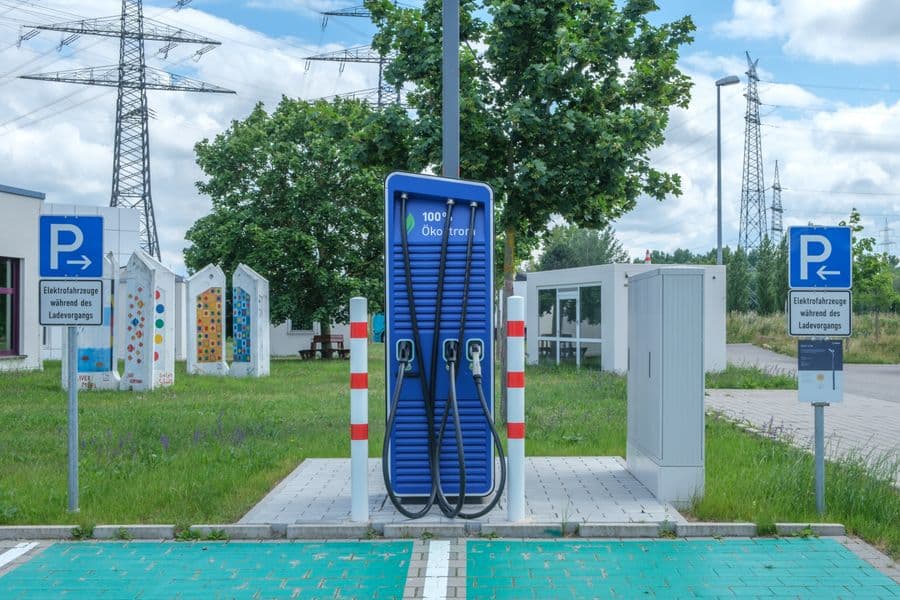
At a Philippine public charging station you almost never pay with cash. You start and pay for a session through a charging app, an RFID tap card, or a QR code — and you load that account with GCash, Maya, or a credit/debit card. There's no attendant swiping your card like at a gas station; the charger and your phone handle everything. Once you've set this up on your first visit, paying takes about ten seconds.
If you're new to EVs, the payment step is the part that trips people up more than the charging itself. This guide walks through the three ways to pay, the apps worth installing, and the small habits that keep you from standing next to a working charger you can't switch on.
The three ways you actually pay
Nearly every public charger in the country uses one of these three methods to start a session and bill you:
- A charging app. You open the network's app, find the station on its map, tap the specific plug, and press start. Payment comes out of a wallet you've pre-loaded or a card you've saved. This is the most common method for fast chargers.
- An RFID tap card. Networks issue a physical card (or a keyfob) linked to your account. You tap it on the charger's reader to unlock the plug and it bills your account automatically — handy when mobile signal is weak.
- A QR code scan. Many chargers print a QR code on the unit. You scan it with your phone camera or the app, which opens the payment page for that exact plug.
Whichever the station uses, the money almost always flows from the same familiar Philippine sources: GCash, Maya, a credit or debit card, or a prepaid balance you topped up in advance. For a refresher on terms like kWh, AC and DC that show up on the payment screen, our EV glossary keeps it plain.
Which apps should you install?
Because the Philippines has several charging operators rather than one national network, most EV drivers keep two or three apps on their phone. The main ones today:
- EVRO — run by ACMobility (Ayala group), EVRO is a *brand-agnostic* charging platform, meaning one account works across many operators' stations, including Shell Recharge sites it has integrated. You can find a plug, monitor the session live, and pay from the app wallet.
- Pluggo — a "find, charge, and pay in one app" platform aiming to be a universal option across networks.
- WeCharge Hyperfast — the app for the WeCharge hyperfast network, letting you locate stations, check whether a plug is free, start the session, and pay.
The practical move is to install the apps for the networks near your usual routes, register with your name, plate and a payment method before you actually need to charge, and confirm each account has a small balance ready. You can see which chargers are around you on the EVChargePH map and cross-check against each network's own app.
A step-by-step first session
The first time is the only slightly fiddly time. After that it's muscle memory:
1. Register in advance. Create your account, add a payment method (GCash/Maya/card), and order an RFID card if the network offers one. 2. Find an available plug. Use the app map to confirm the station is online and a connector is free, then drive there. 3. Match the connector. Check the plug type — CCS2 for most new EVs, CHAdeMO or Type 2 for others. If connector types are new to you, our charging basics hub explains which is which. 4. Authenticate. Tap your RFID card, scan the QR code, or select the plug number in the app. 5. Plug in and start. Connect the cable, then press start in the app or on the unit. Watch for the charging light and the app's live kW reading. 6. Stop and pay. End the session in the app (or just unplug, on some units). You'll be billed automatically and get a receipt in-app.
How much will it charge you — and how is it measured?
Public charging in the Philippines is billed by the kilowatt-hour (kWh) — the amount of energy you put in — sometimes with a small session or connection fee on top. Fast DC chargers usually cost more per kWh than slower AC ones, and a few sites bill by the minute instead. Public AC rates commonly sit in the ₱28-₱35 per kWh range, though DC fast charging and premium locations can run higher.
We keep a fuller breakdown, including how it compares to charging at home and to filling up with petrol, in our guide on how much it costs to charge an EV in the Philippines. The key point for payment: the app shows you a running total as you charge, so you're never surprised at the end.
What about "plug and charge"?
You may have heard about plug-and-charge, where the car itself carries your payment details, so you simply plug in and the station recognises you and bills you — no app, tap, or scan at all. It's the smoothest experience and it's coming (Mastercard and others are piloting in-car payment credentials), but in the Philippines it is still an emerging feature, not something you can rely on at most stations today. For now, assume you'll need the app, card, or QR method above.
Habits that save you a headache
A few simple rules prevent the classic "I'm at the charger but I can't start it" moment:
- Pre-load your wallet. Keep a small balance in each app so a failed top-up at the station doesn't block you.
- Keep one backup method. If the app won't cooperate on weak signal, an RFID card often still works.
- Screenshot your plate and account details in case you need to call network support to start a session manually.
- Check the plug is online first in the app before driving over, and have a second nearby station in mind.
- End the session properly so billing stops and the next driver can use the plug — good etiquette and good for your wallet.
Once your accounts are set up, paying to charge in the Philippines is genuinely easy — tap, scan, or press start, and drive off. If you own a charger and want drivers to be able to pay you the same seamless way, you can list your charger on EVChargePH and start earning from it.
*Charging apps, networks and pricing in the Philippines are changing quickly; app names and the ₱28-₱35/kWh public AC band reflect 2025-2026 sources and should be reconfirmed with each operator before you rely on them.*
Be our partner
Power the Philippines' electric future with us
Earn from an idle charger, or put your brand in front of EV drivers while they charge. Join the EVChargePH network today.