Cost & Ownership
EV Resale Value in the Philippines: Do Electric Cars Hold Their Value? (2026)
By EVChargePH Team · August 24, 2026 · 9 min read
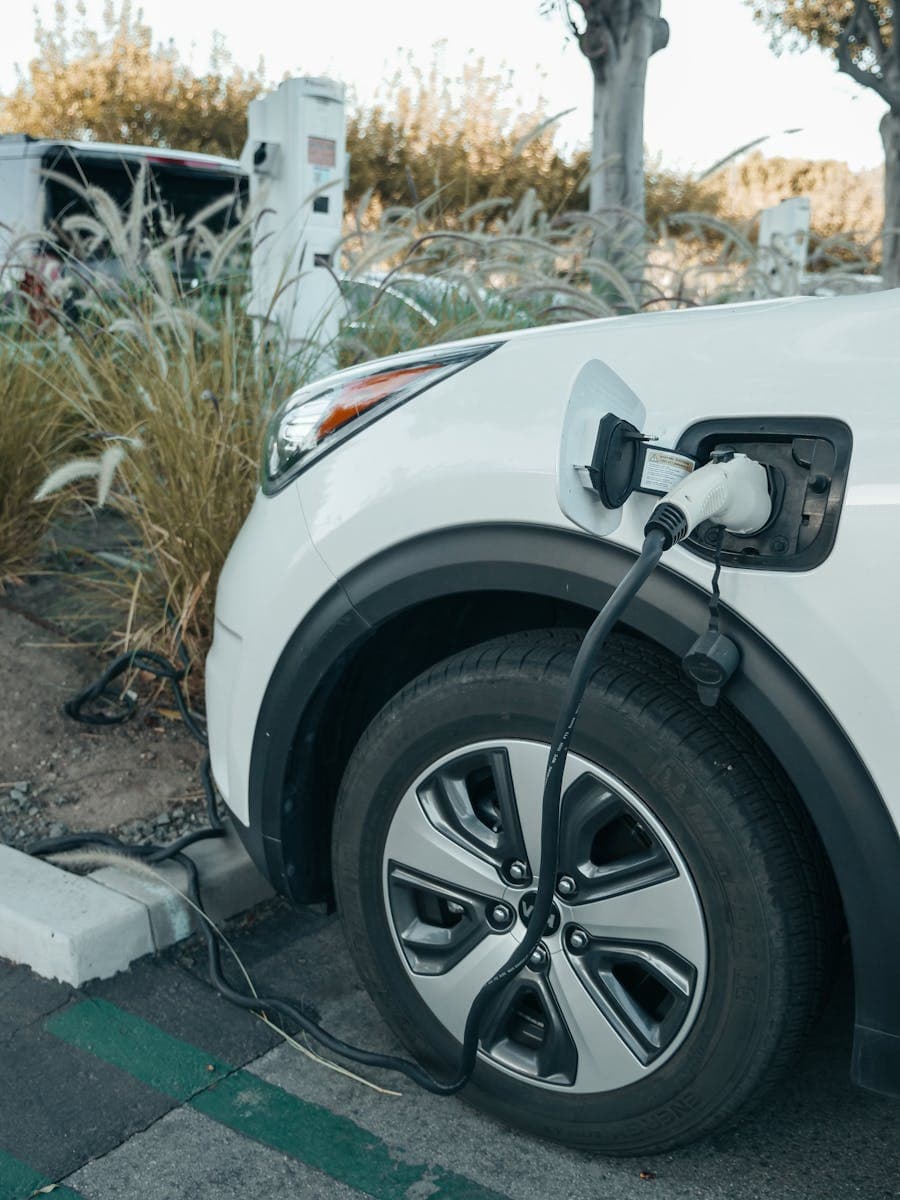
Electric cars have historically lost value faster than petrol cars. In the United States, where there is enough used-EV data to measure it properly, EVs depreciate around 58.8% over five years against an industry average of 45.6% and about 40.7% for hybrids. The Philippines has no equivalent published index yet, but the same forces are at work here — plus a few local ones. The good news: the gap is model-specific, not universal, and a lot of it is inside your control.
Do electric cars really lose value faster than petrol cars?
On the evidence available, yes — though "electric cars" is too broad a category to be useful.
The most widely cited data set is the iSeeCars depreciation study, which analysed more than 800,000 five-year-old used cars. It found EVs as a segment shedding 58.8% of their value in five years, the steepest of any powertrain, versus 45.6% for the market overall. Hybrids and trucks held up best at roughly 40%.
But the spread inside the EV segment is enormous. In the same study:
- The Tesla Model 3 was the best-performing EV at 55.9% — still above the market average, but well ahead of its peers.
- The Tesla Model Y came in at 60.4% and the Nissan LEAF at 64.1%.
- The Jaguar I-PACE was the worst vehicle in the entire study at 72.2%.
Read that as a ranking, not a forecast. It describes cars sold new around 2019–2020, when EVs were expensive, range was short and charging was scarce — the exact conditions that crush residuals.
Why do EVs depreciate faster?
Four things, and it is worth knowing which of them apply to your car.
- Falling new-car prices. When the manufacturer cuts the price of the new model, every used one repriced itself overnight. This has hit the PH market hard as Chinese brands compete aggressively on sticker price.
- Fast-moving technology. A three-year-old EV can be one full generation behind on range, charging speed and software. A three-year-old petrol sedan is just a sedan.
- Battery uncertainty. Buyers who cannot verify battery health assume the worst and bid accordingly.
- Thin buyer pools. Depreciation is partly a demand problem. The fewer people who can charge a car conveniently, the fewer people will bid on it.
The first three are about the car. The fourth is about the country — and that is where the Philippine picture differs.
What makes EV resale value different in the Philippines?
Three local factors matter more here than almost anywhere else.
The buyer pool is growing very fast, from a small base. In the first half of 2026, CAMPI and TMA members sold 31,381 electrified vehicles, more than double the 13,488 sold in the same period a year earlier, and roughly 15% of all vehicles sold — up from about 5% a year before. Battery EVs specifically more than tripled, to 8,702 units from 2,439. Total industry sales actually *fell* 11% over the same period. That is a market where EV demand is rising while overall demand shrinks, which is a supportive backdrop for used EV values.
Charging access is still the ceiling on demand. A used EV is only attractive to someone who can charge it. As covered in our look at the state of EV charging in the Philippines, charger coverage still lags the fleet badly, and it is concentrated in Metro Manila and along the main Luzon corridors. Practically, that means the same car will find more bidders in Makati than in a provincial city — and that resale value in the Philippines is partly a function of how fast public charging expands. You can see current coverage on the charger map.
Brand support and parts availability are unevenly distributed. Some brands here have deep dealer networks, published battery warranty terms and a service history you can point to. Others arrived recently through a single distributor. A buyer of a five-year-old car is really buying the next five years of ownership, and they price in the risk of not being able to get it serviced.
Hybrids remain the safe-resale default. Both the global depreciation data and PH sales patterns point the same way — hybrids made up 54.64% of electrified sales in H1 2026 and are the segment most Filipino buyers still trust on resale. If protecting residual value is your single highest priority, that preference is worth knowing about, though it comes at the cost of the running-cost savings you can model in our EV savings calculator.
Which EVs hold their value best?
There is no published Philippine residual-value index, so treat anyone quoting exact peso retention figures with suspicion. What the international data does support is a set of characteristics:
- High-volume models from brands with a large local dealer network. Depth of market beats badge prestige every time.
- Mainstream price points. Expensive EVs depreciate hardest in absolute pesos and in percentage terms. The luxury EV that cost the most new tends to lose the most.
- Models still in production, with parts and software support. Discontinued models fall off a cliff.
- Cars with a documented, healthy battery. More on this next.
Conversely: a low-volume import, a model with no local service centre, or a first-generation EV with modest range is the profile that depreciates worst.
Battery health is the single biggest lever on price
If a used-EV buyer only checks one thing, it will be the battery — and increasingly they know how to check it. A car with strong state of health commands a clear premium over an otherwise identical car that has lost meaningful capacity.
That makes battery care a financial decision, not just a technical one. The habits that preserve capacity in a hot, humid climate are covered in detail in EV battery health in the Philippine heat, but the short version:
- Avoid sitting at 100% charge for long periods; a daily ceiling around 80% is kinder.
- Do not habitually run the battery to near-empty.
- Use AC charging at home for routine top-ups and save DC fast charging for trips.
- Park in shade or a garage where you can.
- Keep every service record and any battery health report your dealer produces.
The last point is underrated. In a market with no standard residual index, documentation is what converts a healthy battery into a higher offer. A printed state-of-health report is worth more at negotiation time than any amount of insisting the car is fine.
How to protect your EV's resale value
- Keep complete service records from an authorised centre, including software update history.
- Get a battery health check before listing and show the buyer the number rather than making them guess.
- Include the charging kit — the portable cable, the adapter, and the wallbox if you are moving. Buyers value a car they can charge on day one.
- Sell before, not after, a major model refresh if you can time it. New-model launches and price cuts reprice the used stock instantly.
- Be realistic about condition. Tropical humidity, floods and salt air are the same enemies they are for any car. A flood-history EV is a hard sell for good reason — one of several checks in our used EV buying guide.
So does depreciation make an EV a bad buy here?
Not by itself — but it belongs in the arithmetic. Depreciation is usually the largest single cost of owning any new car, and for EVs it is likely to be larger than for an equivalent petrol model. That has to be weighed against lower running costs, lower maintenance, and the EVIDA registration discounts.
The honest framing is this: if you buy new and sell in three years, depreciation will probably dominate your total cost and an EV will likely cost you more than a hybrid. If you buy and hold for eight or ten years, running-cost savings have time to compound and the depreciation gap matters much less. And if you are the *buyer* of a three-year-old EV rather than the seller, steep depreciation is not a problem at all — it is the discount that gets you into the car.
*Depreciation figures cited are from the iSeeCars five-year depreciation study of the US used-car market and are indicative only; Philippine sales figures are from the CAMPI-TMA H1 2026 report. No verified Philippine residual-value index currently exists, so local resale outcomes will vary by model, brand support and region.*
Be our partner
Power the Philippines' electric future with us
Earn from an idle charger, or put your brand in front of EV drivers while they charge. Join the EVChargePH network today.