Charging 101
Can Your EV Power Your Home During a Brownout? V2L Explained (Philippines)
By EVChargePH Team · July 13, 2026 · 8 min read
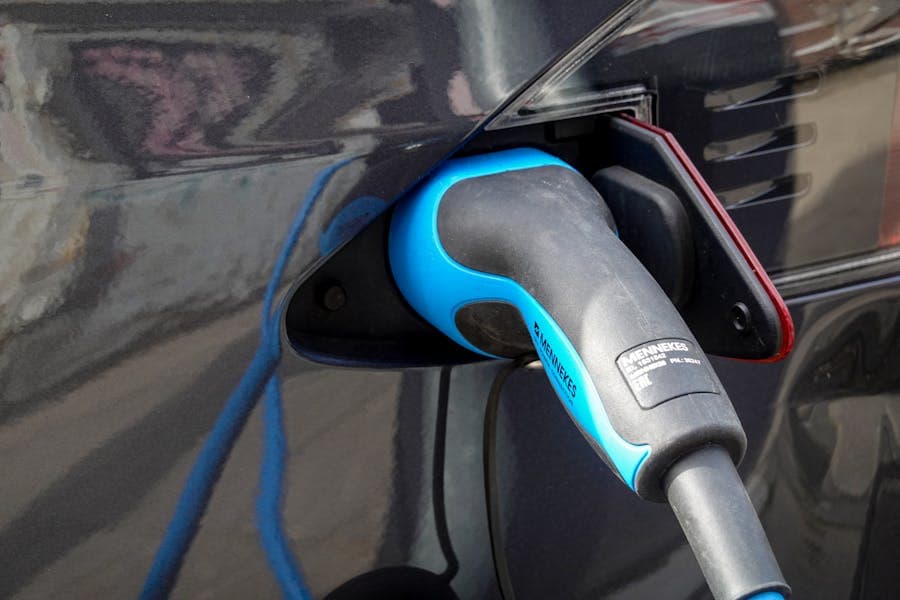
Yes — many EVs sold in the Philippines can power your home during a brownout. The feature is called V2L, or vehicle-to-load, and it turns your car's big traction battery into a giant power bank you can plug appliances into. During a typhoon-season blackout, that means your fridge keeps running, your fans and lights stay on, and your phones stay charged — all from the car parked in your driveway.
For a country that still deals with regular brownouts and long outages after storms, this is one of the most underrated reasons to go electric. Here's exactly how it works.
What is V2L?
V2L lets your EV send electricity *out* of its battery instead of only taking it in. Different brands use slightly different names — BYD calls it VTOL, Hyundai and MG call it V2L — but the idea is the same: a special adapter plugs into the car's charging port and gives you one or more ordinary three-prong sockets on the other end. You plug your appliances into those sockets, and the car quietly powers them.
Because the Philippine grid runs at 230 volts, the output you get here is the full-strength version of the feature (unlike North America, where V2L is roughly half the power). If you want a plain-English glossary of terms like V2L, kWh and AC vs DC, our EV glossary breaks them down.
Which EVs in the Philippines have V2L?
V2L has quietly become a standard feature on most mainstream EVs sold locally. Popular models that offer it include:
- Hyundai Ioniq 5 — outputs up to around 3.6 kW, among the most generous in its class, with both an exterior adapter and an interior socket on some trims.
- BYD Atto 3, Dolphin and Seal — BYD's VTOL delivers up to about 3.3 kW through a discharge adapter on the charge port. It stops discharging once the battery drops below about 15% so you never strand yourself.
- MG4 and MG ZS EV — MG's electric line-up, including the MG4 EV Urban launched at PIMS 2026, ships with V2L capability via an adapter.
Always confirm your exact variant, since the V2L adapter is sometimes bundled and sometimes sold separately. You can browse EV models and their features on our EV hub.
How much can it actually power?
Think of V2L output as a budget measured in watts. Most V2L systems here supply roughly 3.0–3.6 kW (3,000–3,600 watts) total. That's enough to run the essentials of a Filipino home at the same time:
- Refrigerator: ~100–200 W running
- Electric fans (3–4 units): ~200–300 W
- LED lights around the house: ~100–200 W
- Wi-Fi router + charging phones and laptops: ~100 W
- A small TV: ~80–150 W
Add those up and you're well under the limit, with room to spare. What you generally cannot run at full tilt are the heavy-draw appliances — a large split-type aircon, an electric water heater, an induction cooktop, or a clothes dryer — especially several at once. A single small inverter aircon may work on higher-output systems like the Ioniq 5, but treat V2L as "keep the essentials alive," not "run the whole house normally."
How long will it keep the lights on?
This is where an EV blows a typical portable generator out of the water. A generator is limited by how much petrol you've stored; an EV is limited by its battery, which is enormous.
Take a common 60 kWh EV battery. If your household backup load averages around 500 watts (fridge cycling on and off, a few fans, lights and phones), then even using only part of the battery you could keep those essentials running for more than a day and a half on a single charge — and considerably longer if you're careful. *(This is a worked estimate: 60 kWh ÷ 0.5 kW = 120 hours of pure runtime; real usage is lower once you reserve battery for driving and account for conversion losses, but it comfortably clears an overnight or full-day outage.)*
Compared to a fuel generator, V2L is silent, produces no fumes, needs no stored petrol, and doesn't have to sit outside in the rain. For most brownouts and even multi-day post-typhoon outages, an EV with a decent charge is a genuinely capable backup power source.
How to use V2L safely
The feature is designed to be simple, but a few habits keep it safe:
- Use the official adapter for your brand. V2L runs at full household voltage — only use the manufacturer's discharge adapter, not improvised cables.
- Mind the wattage limit. Add up the watts of what you plug in and stay under your car's rated output to avoid tripping the system.
- Keep a driving reserve. Decide a minimum battery level you won't go below (many cars enforce ~15% automatically) so you can still drive to safety or to a charger.
- Keep it dry and ventilated. Position the adapter and any power strip away from standing water, and don't run it in an enclosed, flooding-prone space.
- Recharge afterwards. Once power returns, top up so you're ready for the next outage. If charging at home isn't an option, find a nearby public or shared charger on the EVChargePH map.
Why this matters for Philippine EV buyers
Backup power is usually an afterthought when people compare EVs, but in the Philippine context it's a real, practical perk. A petrol car sitting in a blackout does nothing; an EV with V2L becomes the most useful appliance in the house. It's one more way an EV quietly pays you back beyond fuel savings — and a reminder that the value of going electric grows as the country's charging network makes it easier to keep that battery topped up.
If you already drive an EV with V2L, it's worth buying the adapter *before* the next storm season and testing it once so you know it works. When the lights go out, you'll be very glad you did.
*V2L output figures are manufacturer specifications as of 2026 (Hyundai Ioniq 5 ~3.6 kW; BYD VTOL up to ~3.3 kW; MG V2L via adapter) and runtime examples are worked estimates that vary by vehicle, battery size, load and conditions. Always follow your vehicle's official V2L instructions.*
Be our partner
Power the Philippines' electric future with us
Earn from an idle charger, or put your brand in front of EV drivers while they charge. Join the EVChargePH network today.