Buying Guide
The Best EVs Under ₱2M in the Philippines
By EVChargePH Team · April 21, 2026 · 9 min read
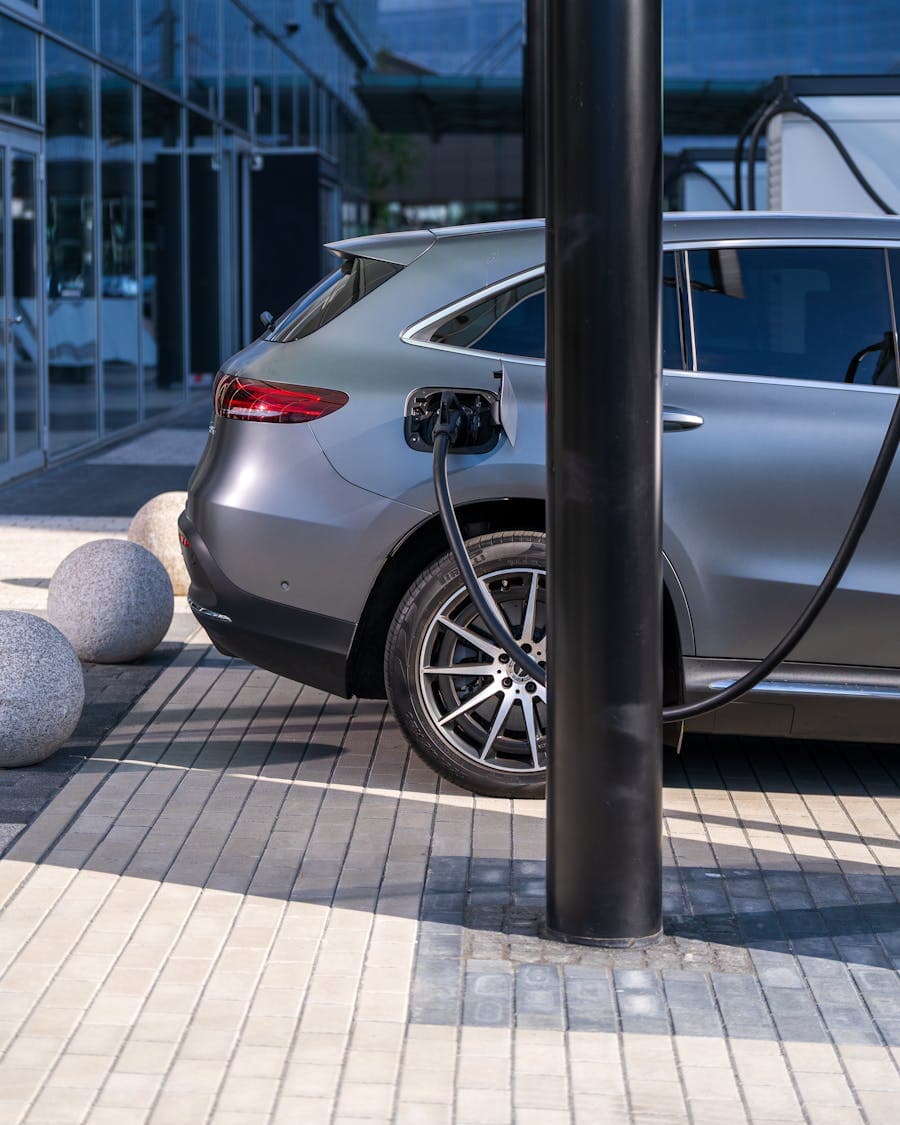
Not long ago, an EV in the Philippines meant a luxury badge and a luxury price tag that put it firmly out of reach for most ordinary buyers. That era is decisively ending. A growing crop of compact and small-SUV electric cars now lands in the more attainable bracket, and stiffening competition between value-focused brands is steadily pushing what your money buys. If you are shopping under roughly two million pesos, this segment is the most exciting part of the local market right now — and also the one where a clear head saves you the most money. Here is how to think it through carefully, without overpaying or, just as costly, overlooking the running-cost side of the ledger that makes EVs so appealing in the first place.
What this budget typically gets you
In this range you are mostly looking at compact hatchbacks, subcompact crossovers, and small SUVs from value-oriented brands rather than premium marques. Expect a city-friendly footprint, a battery sized for daily commuting rather than marathon road trips, and a sensible features list. Some entries surprise with genuinely generous kit; others keep things deliberately basic to hit an aggressive price, so it pays to read each one on its own merits rather than assuming.
- The BYD Dolphin typically anchors the more affordable end as a practical, well-rounded city hatch; our BYD Dolphin overview covers what to expect from it day to day.
- Various MG electric models bring distinctive styling and value positioning that have made the brand a serious player in this bracket for budget-conscious buyers.
- The Nissan Leaf remains a familiar, proven option with a long global track record and an easy-going, undemanding nature that suits first-time EV owners well.
- Smaller crossovers and city-focused models from other value brands round out the field, each leaning slightly differently on range, equipment, or price to carve out its niche.
Exact models and prices shift constantly with promos, supply, and exchange rates, so treat any specific figure as indicative — confirm with current dealer listings before you set your heart on a particular number. The shortlist that suits you depends far more on your daily route and your charging access than on which model happens to be generating the most online excitement this month.
Look past the sticker price
The headline number is only part of the story, and arguably the least important part once you actually own and live with the car for a few years. EVs change the arithmetic of motoring in two big ways that a petrol buyer never even has to think about.
- Energy cost per kilometre is usually far lower than petrol, especially if you charge at home on a residential rate overnight. Our comparison of EV charging cost versus gas shows just how wide that gap can become over a full year of typical driving.
- Maintenance is typically simpler — no oil changes, no exhaust system, fewer moving parts to wear out — though you should still budget sensibly for tyres, brakes, and periodic checks rather than assuming an EV is entirely free to run.
Add these up over a few years and a slightly pricier EV can comfortably undercut a cheaper petrol car on total cost of ownership. The fuller breakdown in our cost of EV ownership guide is the right tool for running this honestly against your own annual mileage rather than a generic national average that may not reflect your driving at all.
Features that matter at this price
When two variants sit close on price, let the practical stuff break the tie rather than the colour of the upholstery or the diameter of the alloy wheels. These are the things you will actually notice and appreciate every single week.
- Real-world range that comfortably covers your daily route with margin to spare — and remember that the brochure figure is a lab number that real driving rarely matches.
- Charging speed and which connectors it supports, so you can actually use the stations near you instead of discovering an awkward incompatibility only after purchase.
- Warranty, particularly on the battery, which is the single most expensive component to replace and the true heart of an EV's long-term value.
- Safety kit such as multiple airbags and electronic stability control, which should never be treated as an afterthought even on a tightly priced budget car.
- Cabin and boot space if you regularly carry passengers or cargo rather than just commuting solo most days.
The charging reality decides everything
A budget EV is only ever as convenient as your charging setup, full stop. If you have a home outlet or wallbox, this segment makes tremendous sense — you top up overnight and rarely give charging a second thought from one week to the next. Our guide to a home charging setup in the Philippines walks through exactly what that takes, and it is usually simpler and cheaper than nervous first-time buyers tend to expect.
If you rely entirely on public chargers, be genuinely realistic about the time involved and the still-patchy coverage outside the major cities as of 2026. Check what is actually available along your daily route on the charger map before you commit a single peso to a purchase. A cheap EV that is awkward to charge will frustrate you far more, and far more often, than a slightly pricier one that slots neatly and invisibly into your life. Honesty about your own charging access is the single most valuable thing you bring to this entire decision, so do not skip it.
Don't ignore the incentives
Government support can meaningfully change the value equation in this bracket, where every peso of the purchase price counts and small differences genuinely swing the decision between models. The EVIDA law and EV incentives can affect what you ultimately pay and own, so factor current policy into your comparison rather than treating the dealer's first quote as the final, fixed word. A model that looks marginally pricier on paper may well land lower once incentives apply, or the reverse, and that can flip your shortlist.
New versus nearly new
It is also worth pausing on whether you genuinely need a brand-new car at all. The EV market moves quickly, and early buyers are beginning to trade up, which means a small but growing supply of lightly used electric cars is appearing below the price of a new one. A nearly new EV with a healthy, still-warrantied battery can stretch your budget considerably further, letting you into a roomier or better-equipped model than the new-car bracket alone would allow.
The trade-off is that a used EV demands a different kind of inspection, with the battery rather than the engine as the central concern. If you go that route, insist on a battery health reading and confirm that any remaining warranty transfers to you, and have someone knowledgeable look the car over before you pay. Buying new buys you simplicity and a full warranty; buying nearly new buys you more car for the money if you do your homework. Neither is wrong, and the right answer depends on how much risk and research you are comfortable taking on.
Watch how the value holds
One honest caveat for this segment is that resale values for EVs are still settling in the local market as of 2026, and they can move faster than petrol equivalents as new models and price cuts arrive. That is not a reason to avoid the bracket, but it is a reason to favour models with a strong battery warranty, a credible service network, and broad appeal, since those tend to hold their value better when it comes time to sell. Buy a car you are happy to keep for the long term rather than one you plan to flip in a couple of years, and the depreciation question matters far less to your wallet.
The verdict for value buyers
The under-two-million EV space is the most democratic corner of the market right now, precisely because it brings genuine electric driving within reach of ordinary buyers rather than just the wealthy few. The best pick is the one whose range, charging access, and warranty line up with your actual life — not simply the cheapest badge sitting on the showroom floor with the biggest discount sticker.
Test drive a couple of contenders, do the running-cost arithmetic honestly, and bring along your daily route and your real parking situation to ground the decision. Let those two facts guide the shortlist far more than any glossy spec sheet ever could. Remember too that this part of the market is moving quickly, with new models, new variants, and fresh price cuts arriving regularly, so it is worth checking the latest options rather than acting on a comparison that is already a year out of date. The patient buyer who waits for the right fit at the right price, rather than jumping at the first promo, tends to come away happiest with a budget EV. And if your home setup happens to give you a spare charging slot once you have made the switch, you can even list your charger to recoup some of the purchase cost from nearby drivers over the months and years you own the car.
Be our partner
Power the Philippines' electric future with us
Earn from an idle charger, or put your brand in front of EV drivers while they charge. Join the EVChargePH network today.